

Marzipan Easter Eggs: A Complete Guide to This Timeless Easter Treat
Easter baskets tend to fill up with the same two or three things every year. Chocolate eggs. Jelly beans. Maybe a stuffed bunny if someone is feeling generous. Marzipan easter eggs rarely make the cut, which is a shame, because they are one of the oldest and most versatile sweets tied to this festival.
If you have never worked with marzipan before, the idea of shaping it into little eggs might sound fussy. It is not. Once you understand the basic ratio of almonds to sugar, the rest is closer to modelling clay than baking.
What Marzipan Easter Eggs Actually Are
Marzipan is a soft, pliable paste made primarily from ground almonds and sugar, usually bound together with a small amount of egg white or glucose syrup. On its own, it has a mild, slightly nutty sweetness that is far less sugary than fondant or royal icing.
Marzipan easter eggs are simply this paste shaped into small egg forms, sometimes left plain, sometimes coated in a thin layer of chocolate, and often tinted in pastel shades that suit the season. Some versions are solid all the way through. Others have a soft centre wrapped in a firmer marzipan shell.
Restaurant pastry chefs sometimes describe marzipan work as sculpting rather than cooking, because so much of the final result depends on how the paste is handled by hand rather than what happens in an oven.
Where This Tradition Comes From
Marzipan itself has roots that trace back centuries across the Mediterranean and Middle East, where almonds were abundant and sugar was considered a luxury reserved for special occasions. Germany, in particular, developed a strong marzipan tradition, with the city of Lübeck often credited as a historic centre of marzipan craftsmanship. According to the Encyclopaedia Britannica, marzipan has been enjoyed in Europe for centuries and remains one of the world’s best-known almond-based confections.
The shift from marzipan being shaped into fruits, animals and figures to being shaped specifically into eggs for Easter follows a broader pattern seen across many cultures, where the egg becomes a symbol of new life and renewal tied to spring celebrations. Chocolate eggs came much later, once cocoa became widely available and affordable in Europe. Marzipan eggs, in many ways, predate the chocolate version by a wide margin.
Marzipan Easter Eggs in India
Easter in India is celebrated with real enthusiasm in states with strong Christian communities, particularly Goa, Kerala, Mangalore and parts of the Northeast. Bakeries in these regions have long made marzipan sweets, though they are more commonly shaped as fruits, animals or simple discs rather than eggs.
The egg shaped version is less common on Indian bakery shelves compared to Europe, which is part of what makes it an interesting home baking project. Almonds are widely available across Indian grocery stores, and the technique does not require any specialised equipment beyond a mixing bowl and a grinder, which makes this a realistic recipe for home cooks rather than something limited to professional confectioners.
Home bakers in India have also started adapting the classic recipe with local flavour notes, such as a hint of cardamom or a light dusting of pistachio, which sit comfortably alongside the traditional almond base without overwhelming it.
What Goes Into a Good Marzipan Easter Egg
The ingredient list is short, which is part of the appeal.
| Ingredient | Typical Role |
|---|---|
| Ground almonds | Base structure and flavour |
| Powdered sugar | Sweetness and binding |
| Egg white or glucose syrup | Holds the paste together |
| Almond extract | Optional, strengthens flavour |
| Food colouring | Optional, for decoration |
| Melted chocolate | Optional, for coating |
The ratio matters more than the exact brand of any single ingredient. A common home ratio is two parts ground almonds to one part powdered sugar, adjusted slightly based on how fine the almond meal is. Too much sugar and the paste turns grainy and overly sweet. Too little and it will not hold its shape once rolled.
Homemade Marzipan Easter Eggs Recipe
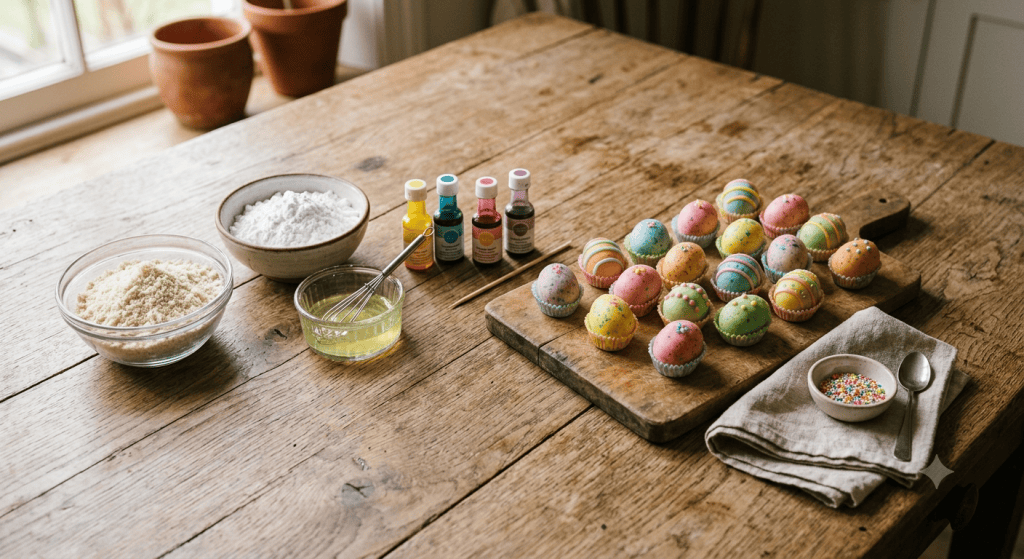
Here is a straightforward method that works well even for a first attempt.
Step 1: Prepare the almond base
Use finely ground almonds, or blanch and grind whole almonds until they resemble a fine flour. Sift out any larger pieces so the final texture stays smooth.
Step 2: Combine with sugar
Mix the ground almonds with powdered sugar in a large bowl. Some cooks warm this mixture very gently over a double boiler for a few minutes, which helps the sugar dissolve slightly and gives a smoother finish.
Step 3: Bind the paste
Add a small amount of lightly beaten egg white, a few drops at a time, kneading after each addition. Stop as soon as the mixture holds together without being sticky. If using glucose syrup instead of egg white, warm it slightly first so it blends in evenly.
Step 4: Knead until smooth
Turn the paste out onto a clean surface dusted with powdered sugar and knead for several minutes, the same way you would knead bread dough, until it feels uniform and pliable.
Step 5: Shape into eggs
Pinch off small portions and roll them between your palms into rough balls, then gently taper one end to form the classic egg shape. A small silicone egg mould also works well if you want consistent sizing across a batch.
Step 6: Colour and finish
If tinting the marzipan, knead a very small amount of gel food colouring into the paste before shaping, since liquid colouring can make the paste too soft. For a chocolate coating, dip the shaped eggs into melted chocolate and place them on parchment paper to set.
Step 7: Rest before serving
Let the finished eggs sit uncovered for a couple of hours. This allows the surface to firm up slightly, which makes them easier to handle and package.
Getting the Shape and Finish Right
A few small adjustments make a noticeable difference in how professional the final batch looks.
Keep your hands very lightly dusted with powdered sugar while shaping, rather than flour, since flour can dull the flavour and change the texture. Work in small batches rather than shaping the entire quantity of paste at once, since marzipan can dry out slightly if it sits exposed to air for too long between shaping sessions.
For a two tone effect, some bakers shape a plain marzipan core and then wrap a thin layer of tinted marzipan around it, giving a marbled cross section when the egg is cut in half.
How to Store Marzipan Easter Eggs
Homemade marzipan easter eggs keep reasonably well if stored correctly.
| Storage Method | Approximate Shelf Life |
|---|---|
| Airtight container, room temperature | 2 to 3 weeks |
| Refrigerated, airtight container | Up to 6 weeks |
| Frozen, well wrapped | Up to 3 months |
Keep the eggs away from direct sunlight and heat, since marzipan can soften and lose its shape in warm conditions. If chocolate coated, refrigeration is generally preferred, though the eggs should be brought back to room temperature before serving for the best texture.
For general food safety and hygienic storage practices in home kitchens, you can also follow the recommendations published by the Food Safety and Standards Authority of India (FSSAI).
Nutritional Snapshot
Almonds bring a reasonable amount of protein, fibre and healthy fats to marzipan, though the added sugar keeps this firmly in the treat category rather than a health food. According to the USDA FoodData Central database, almonds are naturally rich in healthy fats, protein, fibre, vitamin E and magnesium, making them one of the most nutrient-dense nuts. A rough estimate for a standard homemade batch looks like this per 30 gram serving, roughly the size of one small egg.
| Nutrient | Approximate Value |
|---|---|
| Calories | 120 to 140 kcal |
| Protein | 2 to 3 grams |
| Total fat | 6 to 7 grams |
| Carbohydrates | 15 to 17 grams |
| Sugar | 13 to 15 grams |
| Fibre | 1 gram |
These figures vary depending on the exact almond to sugar ratio used and whether the eggs are coated in chocolate. Portion control matters here the same way it does with any confectionery, and marzipan is best treated as an occasional festive sweet rather than an everyday snack.
Flavour Variations Worth Trying
Once the base recipe feels comfortable, small flavour changes can make each batch feel different without touching the core method.
A few options that work well:
- Add a pinch of ground cardamom to the paste for a warmer, slightly spiced note
- Fold in finely chopped pistachios for texture and a subtle green tint
- Use orange blossom water instead of plain water when the paste needs loosening slightly
- Swap almond extract for a small amount of rosewater for a floral finish
- Dust finished eggs lightly with cocoa powder instead of a full chocolate coating for a lighter alternative
None of these changes require adjusting the base ratio of almonds to sugar, which keeps the recipe forgiving even while experimenting.
Marzipan vs Chocolate Easter Eggs
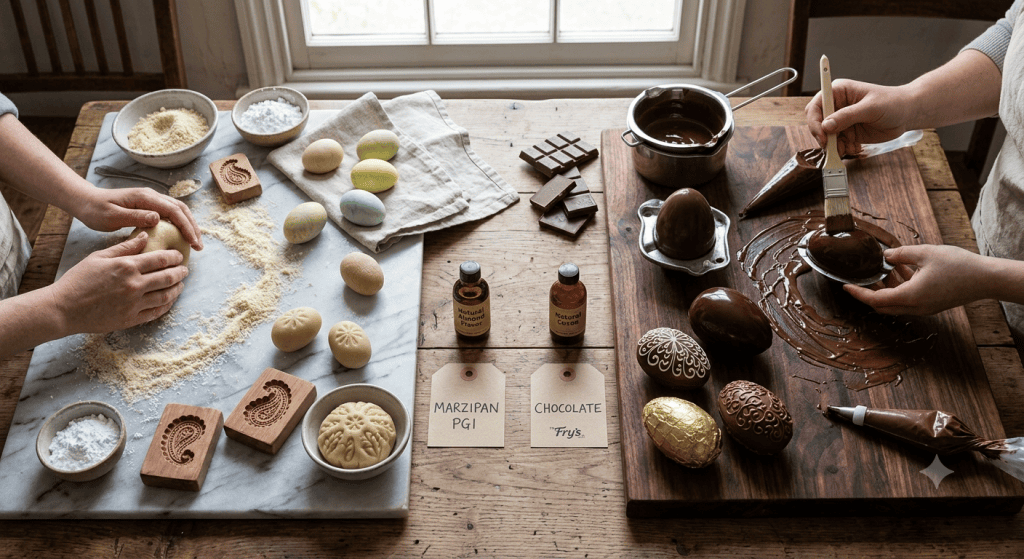
Both have a place at the Easter table, but they suit different needs.
| Factor | Marzipan Eggs | Chocolate Eggs |
|---|---|---|
| Base ingredient | Ground almonds and sugar | Cocoa solids and sugar |
| Texture | Dense, slightly chewy | Firm, snaps when broken |
| Sweetness level | Moderate | Often higher |
| Shelf life | Several weeks | Several months |
| Ease of home preparation | Moderate, hands on shaping | Easy with moulds |
| Dietary flexibility | Naturally gluten free | Varies by brand and type |
For households managing nut allergies, chocolate is the safer default. For anyone wanting a less sugary, more traditional option with genuine European roots, marzipan easter eggs remain hard to beat.
Marzipan Easter Eggs Gifting Ideas
Marzipan easter eggs travel well and hold their shape better than chocolate in warmer climates, which makes them a practical gifting option.
A few ideas worth trying:
- Pack a small assortment of pastel coloured eggs in a paper cone tied with ribbon
- Arrange a dozen eggs in a shallow wooden box lined with tissue paper
- Pair a batch with a handwritten recipe card as a gift for someone who enjoys baking
- Combine marzipan eggs with dried fruit and nuts for a small festive hamper
Because the ingredients are simple and the shelf life is reasonably long, these make a good option for anyone preparing gifts a few days ahead of Easter rather than at the last minute.
Common Mistakes to Avoid
A few recurring issues tend to show up with first attempts.
The paste can turn oily if almonds are ground for too long, since the natural oils start to separate. Pulse the almonds in short bursts rather than running the grinder continuously.
Adding too much egg white at once often leads to a paste that is too soft to shape. Add it gradually and stop as soon as the mixture comes together.
Using liquid food colouring instead of gel colouring can leave the paste tacky and difficult to work with. Gel colouring gives strong colour without adding excess moisture.
Skipping the resting period after shaping can leave the eggs too soft to package neatly. A short rest at room temperature makes a real difference to the final presentation.
Marzipan Easter Eggs FAQs
What is marzipan made of?
Marzipan is made primarily from ground almonds and sugar, usually bound with egg white or glucose syrup, sometimes with a touch of almond extract added for flavour.
Is marzipan easter eggs recipe vegan?
A standard recipe using egg white is not vegan, but glucose syrup or a plant based binder can be substituted to make a vegan friendly version without changing the texture by much.
How long does marzipan last once made?
Stored in an airtight container, homemade marzipan typically lasts two to three weeks at room temperature, up to six weeks refrigerated, and up to three months frozen.
What is the difference between marzipan and fondant?
Marzipan is almond based with a naturally nutty flavour and slightly denser texture, while fondant is primarily sugar based, smoother, and used more for coating cakes than for standalone sweets.
Can marzipan easter eggs be made without eggs in the recipe itself?
Yes, egg white can be replaced with glucose syrup or a small amount of light corn syrup, which still binds the almond and sugar mixture effectively.
Do marzipan easter eggs need refrigeration?
Plain marzipan eggs can be kept at room temperature in a cool spot for a couple of weeks. Chocolate coated versions benefit from refrigeration, particularly in warmer climates.
Ready to Try This at Home
Marzipan easter eggs are one of those recipes that reward patience over precision. The ingredient list is short, the technique is forgiving once you get a feel for the paste, and the result is a sweet that feels genuinely festive without leaning on the same chocolate everyone already expects.
If you enjoy practical step-by-step guides, you can also read our Car Inspection Service Guide 2026, another detailed article designed to make complex topics easy to understand.
If you try the recipe above, keep the ratios close to the guide on your first attempt, then adjust sweetness and texture to your own taste on the next batch. Once you have the basic method down, shaping other festive forms with the same paste becomes an easy next step.