Electric Vehicle Spare Parts in India: The Real Cost, Availability and Buying Reality
Electric vehicle spare parts in India are not as easy to find as most buyers assume. An EV owner in Nagpur discovered last year that a faulty onboard charger on his Tata Nexon EV would take four weeks to replace. The part had to come from a central warehouse. No local dealer had it in stock. The car sat at the service centre while he arranged alternate transport. The bill came to Rs 28,000.
This is not a rare story. It is what happens when people buy electric vehicles based only on fuel savings and ignore the spare parts reality. That reality is what this article covers.
Understanding electric vehicle spare parts before buying an EV can help owners avoid unexpected expenses, longer repair wait times, and availability issues that are still common in many parts of India.
The EV Spare Parts Reality Most Buyers Discover Late
India’s petrol car spare parts ecosystem took 30 years to build. Mechanics in small towns know the Maruti 800 engine by touch. Generic parts are available at every auto parts market from Ludhiana to Kochi. A broken sensor on a Swift gets fixed the same day in most cities.
The electric vehicle parts ecosystem is roughly five years old. The situation is improving fast but it is not there yet. Most EV components are proprietary, meaning they come only from the manufacturer or their authorized dealers. Third party alternatives exist for basic items like tyres and brake pads. But for anything electronic, software dependent, or specific to the drivetrain, you are buying from the OEM at OEM prices and waiting for OEM delivery timelines.
The availability of electric vehicle spare parts also varies significantly between manufacturers. Brands with larger service networks generally maintain better inventory levels, while newer brands may still be building their supply chains. This difference often becomes noticeable only when a replacement part is required.
This does not make EVs a bad purchase. It makes informed buying more important than it is for a petrol car. Knowing which parts are easy to source and which are not can directly affect how much you spend and how long your car sits off the road when something goes wrong.
For buyers comparing different models, understanding electric vehicle spare parts availability is just as important as checking battery range, charging speed, or claimed running costs. A vehicle with strong after-sales support can save both time and money over the years.
Many first-time EV owners focus entirely on fuel savings and battery technology, but overlook the practical side of ownership. The reality is that electric vehicle spare parts availability often becomes important only after a repair is needed. Researching the service network, parts inventory, and replacement costs before purchase can prevent unpleasant surprises later.
Parts That EV Owners Replace Most Often
Not everything in an electric vehicle is unfamiliar territory. Several components wear out in the same way they do in petrol cars and the replacement process is similar.
Tyres
EV tyres wear faster than standard tyres because electric motors deliver instant torque from zero RPM. This puts more stress on the contact patch at every startup. A Nexon EV owner in stop and go city traffic will typically see tyre wear every 35,000 to 45,000 km rather than the 60,000 km you might expect on a petrol car. Replacement cost per set runs from Rs 18,000 to Rs 30,000 depending on brand and variant.
12V Auxiliary Battery
Every electric car runs two battery systems. The main traction battery powers the motor. A separate 12V lead acid battery powers the electronics, lights, and accessories. This 12V battery typically needs replacement every 3 to 4 years, the same as a regular car battery. Cost is Rs 3,000 to Rs 6,000 and it is available at most authorized service centres and battery shops. This is one of the few EV parts that is genuinely easy to source anywhere in India.
Brake Pads
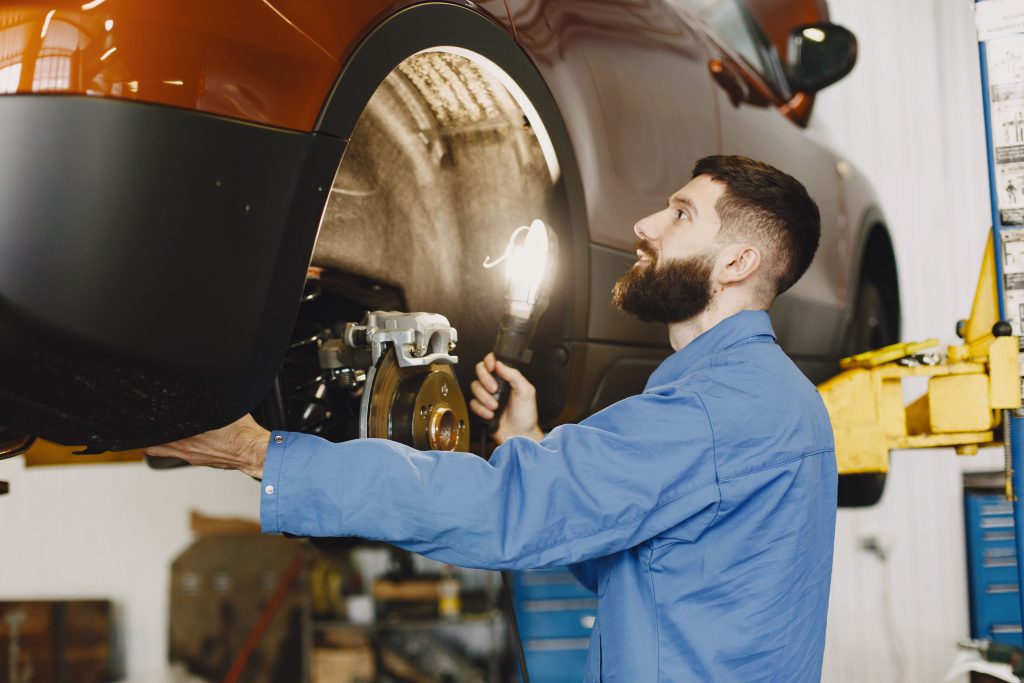
EVs use regenerative braking to slow down before the physical brakes engage. This means brake pads last significantly longer than in petrol cars, often 80,000 to 1,00,000 km before replacement is needed. When they do need changing, the cost is Rs 2,500 to Rs 5,000 for a set. Availability is reasonable at authorized centres across India.
Charging Port
The charging port is a mechanical component that gets used daily and wears over time. Pins can bend, connectors can loosen, and in some cases moisture ingress causes contact issues. A charging port replacement on a Nexon EV costs Rs 8,000 to Rs 15,000 and needs to be done at an authorized service centre. Third party repair is available in some metros but carries warranty risk.
Cabin Air Filter and Coolant
These are straightforward maintenance items. Cabin air filter replacement costs Rs 800 to Rs 1,500. EV coolant for the battery thermal management system needs checking every 40,000 to 60,000 km. These are available at authorized centres and the cost is comparable to petrol car equivalents.
Price Reality: What Common Electric Vehicle Spare Parts Actually Cost
| Spare Part | Nexon EV | MG ZS EV | Ola S1 Pro | Availability |
| Tyres (per set) | Rs 18,000-30,000 | Rs 20,000-32,000 | Rs 4,000-8,000 | Good |
| 12V Auxiliary Battery | Rs 3,000-6,000 | Rs 4,000-7,000 | Rs 1,500-3,000 | Good |
| Brake Pads (set) | Rs 2,500-5,000 | Rs 3,000-5,500 | Rs 800-1,500 | Moderate |
| Charging Port | Rs 8,000-15,000 | Rs 10,000-18,000 | Rs 5,000-9,000 | Authorized only |
| Cabin Air Filter | Rs 800-1,500 | Rs 900-1,800 | Not applicable | Good |
| AC Compressor | Rs 25,000-45,000 | Rs 28,000-50,000 | Not applicable | Authorized only |
| Suspension Arms | Rs 6,000-12,000 | Rs 7,000-14,000 | Rs 2,000-4,000 | Moderate |
The Most Expensive Electric Vehicle Spare Parts Nobody Talks About
Most EV ownership discussions focus on fuel savings and running costs. What gets far less attention is the cost of replacing the major components that most owners never expect to need. These parts are expensive, proprietary, and not always available quickly.
Battery Pack
The battery is the most expensive component in any electric vehicle. For the Tata Nexon EV with a 30.2 kWh pack, a full replacement from an authorized Tata service centre costs Rs 5.5 lakh to Rs 7 lakh. The Nexon EV Max with the 40.5 kWh pack costs Rs 7.5 lakh to Rs 9 lakh. For MG ZS EV owners, the 44.5 kWh battery pack replacement runs Rs 6 lakh to Rs 10 lakh. These figures are if the battery fails outside warranty. Most buyers never need this replacement within the warranty period, but the number matters when evaluating long term ownership risk.
Battery Management System
The BMS is the brain of the battery pack. It monitors cell voltage, temperature, and state of charge across hundreds or thousands of individual cells. A BMS failure can trigger error codes, range reduction, or complete battery shutdown even when the cells themselves are healthy. BMS replacement or repair costs Rs 40,000 to Rs 80,000 depending on the vehicle. This is not a part available outside authorized channels.
Onboard Charger
The onboard charger converts AC power from your home charger into DC power to charge the battery. When it fails, the car can no longer charge at home or at slow AC public chargers. DC fast charging bypasses the onboard charger and may still work in some cases. Replacement costs Rs 25,000 to Rs 55,000 and parts availability varies significantly by brand and city.
DC Fast Charging Module
This component handles the conversion when using public DC fast chargers. A failure here means your car can no longer use fast chargers. Replacement costs Rs 30,000 to Rs 70,000 and typically requires the car to be at an authorized dealer for one to three weeks while the part is sourced.
Motor Controller
The motor controller manages power delivery from the battery to the electric motor. A failed controller affects acceleration, efficiency, and in severe cases leaves the car unable to move. Replacement costs Rs 50,000 to Rs 1,20,000 depending on the vehicle and is exclusively available through OEM channels.
| Component | Approximate Replacement Cost | Availability |
| Battery Pack (30 kWh class) | Rs 5.5 lakh – Rs 7 lakh | Authorized only, 2-4 weeks wait |
| Battery Pack (40 kWh class) | Rs 7.5 lakh – Rs 9 lakh | Authorized only, 2-6 weeks wait |
| Battery Management System | Rs 40,000 – Rs 80,000 | Authorized only |
| Onboard Charger | Rs 25,000 – Rs 55,000 | Authorized only, 1-3 weeks wait |
| DC Fast Charging Module | Rs 30,000 – Rs 70,000 | Authorized only, 1-4 weeks wait |
| Motor Controller | Rs 50,000 – Rs 1,20,000 | Authorized only |
Why Finding Electric Vehicle Spare Parts Depends on Your City
Where you live is one of the most important factors in your EV ownership experience after the vehicle itself.
Metro Cities: Delhi, Mumbai, Bengaluru, Chennai, Hyderabad, Pune
Multiple authorized service centres from Tata, MG, Hyundai, and Ola are present. Parts for common repairs are usually in stock or arrive within 3 to 7 days. Third party workshops specializing in EVs are beginning to emerge in these cities. For most repairs and maintenance items, the metro experience is comparable to owning a petrol car.
Tier 2 Cities: Jaipur, Lucknow, Nagpur, Bhopal, Indore, Chandigarh
Authorized service centres exist but are fewer and often have limited parts inventory. Wait times for non-standard parts range from 1 to 4 weeks. For Tata EV owners, coverage is better because Tata has the widest EV service footprint in India. For MG and Hyundai EV owners, options are more limited. Ola service centres exist in most Tier 2 cities but complex repairs may require the scooter to be sent to a regional hub.
Tier 3 Cities and Beyond
This is where EV ownership currently has real limitations. Authorized EV service centres are rare or non-existent. Basic maintenance can often be done at local mechanics for tyres, brakes, and the 12V battery. Anything involving the drivetrain, battery system, or charging electronics typically requires the vehicle to be transported to the nearest authorized centre, sometimes hundreds of kilometers away. This adds both cost and downtime to any significant repair.
A 2025 industry report confirmed that spare parts availability remains a persistent challenge across India, particularly for EVs outside metro areas. The situation is improving but buyers in smaller cities should factor this into their ownership expectations.
Authorized, Third Party or Online: Where Should You Buy EV Spare Parts?
Authorized Service Centres
For any component that affects the battery, drivetrain, or charging system, authorized centres are the only safe option. Repairs done by unauthorized mechanics can void your remaining warranty and create safety risks. For basic maintenance like tyres, brake pads, and cabin filters, authorized centres work fine but are often priced 20 to 40 percent higher than alternatives.
Third Party Workshops
A small but growing number of workshops in metros now specialize in EV maintenance. These are suitable for tyres, brake service, suspension work, and general maintenance. They are not equipped to handle battery or charging system repairs in most cases. Verify the workshop has trained EV technicians before handing over the vehicle.
Online Platforms
Platforms like NayaPurana, MotorKit, and CarDekho’s spare parts section carry EV components for popular models. Body parts, filters, and some electrical accessories are available at reasonable prices. For parts that require calibration or software setup after installation, buying online and fitting at an unauthorized workshop carries risk. Check return and warranty policies carefully before purchasing high value components online.
How Smart EV Owners Keep Spare Parts Costs Low
Annual Maintenance Contract: Most EV manufacturers offer AMC plans that cover standard service and some parts replacement at a fixed annual cost. For Tata EV owners, these plans start around Rs 6,000 to Rs 12,000 per year and cover major service items. Buying an AMC shortly after purchase locks in the current pricing and removes uncertainty from routine maintenance costs.
Extended Warranty: The standard battery warranty covers manufacturing defects. An extended warranty adds protection against component failures after the standard period ends. This is especially worth considering for anyone planning to keep the vehicle beyond five years. Extended warranty costs vary by model but typically run Rs 8,000 to Rs 20,000 for two additional years.
Highway Driving Habit: Battery health is affected by charging patterns. Frequent DC fast charging degrades the battery faster than regular AC home charging. Avoiding fast charging for daily use and reserving it for highway trips extends battery life and reduces the chance of needing expensive battery service during the ownership period.
Service History: Maintaining a complete service record at authorized centres keeps your warranty intact and creates a documented history that is useful during resale. Gaps in service history reduce resale value and can create complications if a warranty claim arises later.
Check Part Availability Before Buying a Model: If you live in a Tier 2 or Tier 3 city, call the nearest authorized service centre for your shortlisted model before finalizing the purchase. Ask specifically about parts inventory and average wait times for non-routine repairs. This one phone call can save you weeks of frustration later.
FAQs
Are electric vehicle spare parts more expensive than petrol car parts in India?
Yes, many electric vehicle spare parts are more expensive than comparable petrol car components. Basic maintenance items such as tyres, brake pads, and filters usually cost a similar amount. However, major EV components like the battery pack, onboard charger, motor controller, and Battery Management System (BMS) are significantly more expensive because they are proprietary, produced in lower volumes, and typically available only through authorized service networks. The battery pack remains the costliest component in an EV and has no direct petrol-car equivalent in terms of replacement cost.
How long does it take to get EV spare parts in India?
In metro cities, common parts arrive within 3 to 7 days. Less common components can take 2 to 4 weeks. In Tier 2 and Tier 3 cities, wait times are longer because parts are sourced from regional or central warehouses. Complex components like onboard chargers and motor controllers can take 3 to 6 weeks outside major cities.
Can local mechanics repair electric vehicles in India?
Local mechanics can handle basic tasks like tyre changes, brake pad replacement, and 12V battery swaps. They cannot safely service the traction battery, motor controller, BMS, or charging system. Attempting these repairs outside authorized centres risks voiding the warranty and creating safety hazards. For anything beyond basic maintenance, always use an authorized EV service centre.
Which EV brand has the best spare parts availability in India?
Tata Motors currently has the strongest EV service network in India, with authorized centres present in most cities and a supply chain that supports the Nexon EV, Punch EV, and Tiago EV. MG has reasonable coverage in metros and Tier 1 cities. Hyundai Kona owners outside major metros may face challenges. Ola service availability has improved in recent years but complex scooter repairs sometimes require sending the vehicle to a regional hub.
Do EV spare parts come with warranty?
Genuine parts fitted at authorized service centres carry a parts and labour warranty that typically covers 6 to 12 months or a fixed kilometre limit. Third party parts and repairs generally do not carry manufacturer warranty and may void remaining vehicle warranty if fitted incorrectly. Always ask for warranty documentation when getting parts replaced.
So, What Should You Take Away From All of This?
Electric vehicle spare parts in India are getting easier to find and more affordable every year. But the ecosystem is not mature yet, and pretending otherwise does not help buyers make good decisions.
If you live in a metro city, buy a Tata EV, and plan your ownership around an AMC and the standard battery warranty, your experience will be largely trouble free. The parts availability, service network, and warranty support are strong enough that day to day ownership is not significantly more complicated than a petrol car.
If you live outside a major city, the calculation changes. Not because EVs are unreliable, but because the support infrastructure has not caught up with adoption rates in smaller markets yet. Factoring in longer repair waits and fewer local options is not pessimism, it is practical planning.
The expensive parts on an EV are genuinely expensive. The battery, the motor controller, the onboard charger. But most of these components come with long warranties and fail at rates that are currently lower than engine components in aging petrol cars. The risk is real but it is manageable when you go in knowing what you are dealing with.
Prices mentioned here are based on manufacturer data, service centre quotes, and industry sources as of 2026. Costs may vary by city, vehicle variant, and market conditions.