

Business Planning and Strategy: How Business Needs Change From Startup to Scale
Most business owners treat planning as a one time task. They create a plan, put it aside, and move on. However, businesses that achieve sustainable growth treat planning and strategy as an ongoing process that evolves as the business evolves.
The decisions that matter during the first month of a business are very different from the decisions that matter in the third or fifth year. A strategy that works for a startup may become ineffective or even harmful for a scaling company. Understanding how business planning and strategy change across different stages is what separates businesses that simply survive from those that continue to grow.
Strong business planning and strategy help business owners make better decisions, allocate resources effectively, manage risk, and respond to changing market conditions. Instead of relying on assumptions, businesses that plan consistently are better positioned to identify opportunities, avoid costly mistakes, and create a clear path toward long term growth.
This article explores how planning and strategy evolve from the idea stage to maturity, highlighting the decisions, challenges, and priorities that shape business success at every stage of growth.
Why Business Planning and Strategy Matter at Every Stage
Business planning is not a document you write once and file away. It is an ongoing process of making decisions, testing assumptions, and adjusting direction based on what is actually happening in the market.
The reason planning matters at every stage is simple: the challenges a business faces change completely as it grows. A business dealing with whether its idea is viable has almost nothing in common, strategically, with a business deciding whether to open a second location. Applying the same planning approach to both situations leads to poor decisions.
Strategy evolves because the questions evolve. Early on, the question is whether the business can exist. Later, the question becomes how it can compete. Later still, it becomes how it can sustain an advantage it has already built. Each of these questions requires a different kind of thinking, different data, and different decision-making frameworks.
Businesses that grow consistently are not the ones with the best initial plan. They are the ones that treat planning as a habit — something that happens regularly in response to real information, not something that happens once before the business launches.
The Idea Stage: Validating Before You Build

At the idea stage, the biggest strategic mistake is planning too much. Many aspiring entrepreneurs spend months writing detailed business plans before speaking to a single potential customer.
The core planning task at this stage is not to perfect a document. Instead, it is to answer three important questions honestly. Is there a real problem worth solving? Are there enough people who face this problem? Would they be willing to pay for a solution?
A street food vendor testing three different snack options at a weekend market is doing better business planning than someone who spent six months writing a 50-page plan. Real feedback from real people provides the most valuable strategic insight at this stage. Research on startup failures consistently highlights the importance of understanding market demand before investing heavily, reinforcing why validation should come before expansion.
What Strategy Looks Like at the Idea Stage
The strategy at this stage is simple: test before investing. Identify the smallest possible version of the idea, present it to real people, and make decisions based on their feedback. Every rupee spent validating an idea is often more valuable than spending money on a product or service that customers may not actually want.
At this stage, a detailed business plan has limited value. What matters more is documenting your assumptions about customers, pricing, and market demand, then testing whether those assumptions are correct. This approach creates clarity, reduces risk, and helps entrepreneurs focus on learning rather than overplanning.
The Launch Stage: Entering the Market With Clarity
Once the idea has been validated, the launch stage demands a different kind of planning. The question is no longer whether the business can exist. The focus now shifts to how the business will compete and attract customers.
At this stage, planning involves making clear decisions about three areas: the target customer, the unique value being offered, and the most effective way to reach potential buyers with limited resources.
For example, a handmade jewellery brand launching in Jaipur must decide whether to focus on local customers, tourists seeking authentic Rajasthani products, or online shoppers across India. Each choice leads to a different approach to pricing, marketing, product presentation, and customer acquisition.
The Planning Trap to Avoid at Launch
The most common launch mistake is trying to reach everyone. A business that targets everyone effectively targets no one. The strongest launch strategies focus on a specific customer group, a primary marketing channel, and a clear message. Once those elements are working consistently, expansion becomes much easier and less risky.
Pricing strategy also deserves careful attention during the launch stage. Setting prices too low to attract early customers can create long-term challenges because customers who choose a business primarily for low prices are often resistant to future price increases. A better approach is to set prices that reflect the value being delivered, even if customer acquisition takes a little longer in the beginning.
Pricing decisions made during the launch stage can have a lasting impact on profitability and cash flow. Understanding the fundamentals of financial planning can help business owners create more sustainable pricing and growth strategies.
The Early Growth Stage: Building Systems That Can Repeat Results
Early growth is the stage where many businesses begin to feel the pressure of their own success. Orders are increasing, customers are returning, and demand is growing. At the same time, founders often find themselves overwhelmed because too many responsibilities still depend on them personally.
Planning during this stage focuses on creating systems and processes that allow the business to operate consistently. The objective is to move from a business that relies heavily on one individual to one that can function efficiently through documented workflows and clearly defined responsibilities. Strategic decisions at this stage often involve determining which areas should be systemized first, such as operations, customer service, or sales.
Consider a small cloud kitchen that began with the owner managing orders, preparing food, and coordinating deliveries. As demand increases, the business must decide where additional support will have the greatest impact. Hiring a cook, a delivery partner, or an order management assistant may each solve a different operational challenge. Choosing the right priority is a strategic decision because it removes the most significant bottleneck and creates capacity for further growth.
For businesses experiencing steady demand, building repeatable systems is often more valuable than pursuing rapid expansion. Consistent processes improve efficiency, maintain service quality, and create a stronger foundation for future growth.
Competitive Advantage Becomes a Real Priority
Early growth is also the stage when competitors begin paying attention. A local bakery may initially compete through product quality and personal customer relationships. However, after building a loyal customer base, the business needs to identify what makes it difficult for customers to switch to an alternative provider. Competing on price alone is rarely sustainable over the long term. Strong customer loyalty, consistent quality, and a recognizable brand create advantages that are much harder for competitors to replicate.
This stage is also the right time to move beyond informal decision-making and start measuring performance more systematically. Business owners should understand which products or services generate the highest profit margins, which customer groups return most frequently, and which marketing channels produce actual sales rather than just engagement.
The insights gained from these measurements should guide future decisions. Businesses that focus resources on their most profitable products, strongest customer segments, and highest-performing marketing channels are typically better positioned for long-term growth than those that rely on assumptions alone.
At this stage, effective business planning and strategy become increasingly data-driven. Decisions based on performance metrics are often more reliable than decisions based on instinct, helping businesses scale with greater confidence and consistency.
Common Business Planning and Strategy Mistakes to Avoid
Across all stages, certain planning mistakes appear repeatedly in businesses that struggle to grow. Identifying these mistakes early can help business owners avoid costly setbacks and make more informed decisions as the business expands.
Scaling too early is one of the most common and damaging mistakes. Businesses that begin hiring aggressively, opening new locations, or launching additional products before stabilizing their core operations are often building on a weak foundation. Sustainable growth should be supported by proven results rather than ambition alone.
Hiring without documented processes creates a different challenge. When new team members join before responsibilities and workflows have been clearly defined, the result is often inconsistent performance and excessive dependence on the founder. Processes do not need to be complicated. Even a simple checklist that outlines how customer orders are handled can improve consistency and accountability.
Another common mistake is chasing every opportunity that appears. Businesses that pursue every new customer segment, product idea, or market opportunity often spread their resources too thin. Strategic focus requires making deliberate choices about what to pursue and what to decline.
Cash flow management is another area where many businesses struggle. Revenue and cash flow are not the same thing. A business may appear profitable on paper while still facing cash shortages during specific periods. Regular cash flow monitoring helps business owners anticipate challenges, manage expenses effectively, and make more confident financial decisions.
Strong financial planning becomes especially important as a business grows. Businesses that understand their cash position and future funding needs are generally better prepared to handle unexpected challenges and invest in new opportunities when they arise.
The Expansion Stage: Managing Resources While Scaling
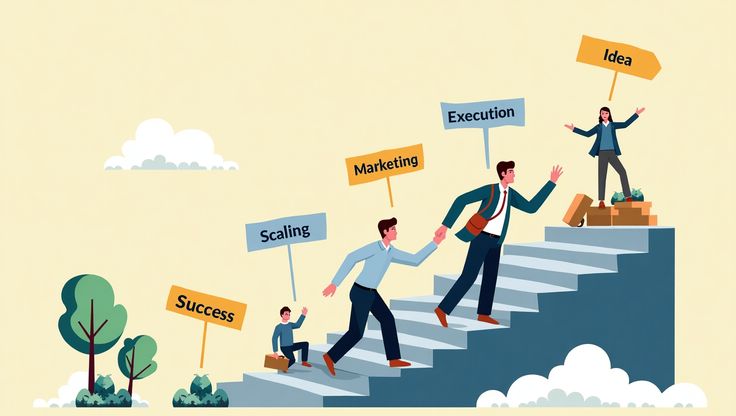
Expansion is the most strategically complex stage for most businesses. Everything that worked at a smaller scale starts showing cracks when volume increases.
Planning at this stage involves decisions about capital allocation, team structure, and market expansion. The strategic question is not just where to grow but in which sequence. Should the business open a new location, launch a new product line, or expand to a new city?
Many businesses make the mistake of trying to do all three at the same time. Expanding in all directions simultaneously drains cash, splits management attention, and increases the risk that none of the bets pay off. Strong expansion strategy means picking one direction, funding it properly, and proving results before moving to the next initiative.
Resource Planning Becomes Non-Negotiable
At the expansion stage, resource planning becomes increasingly important. Cash flow management is no longer optional because growth often creates financial pressure even when revenue is increasing. Many profitable businesses have struggled because they expanded too quickly without monitoring whether incoming revenue was keeping pace with rising expenses.
For example, a business may generate strong monthly revenue while still facing cash shortages if customers take 90 days to make payments and suppliers require payment within 30 days. In situations like this, profitability on paper does not always translate into financial stability.
Hiring decisions also become more complex during expansion. Adding permanent employees too quickly can create fixed costs that are difficult to manage if growth slows unexpectedly. As a result, many growing businesses combine a core team of full-time employees with contractors, consultants, or freelancers to maintain flexibility while managing increased demand.
Effective business planning and strategy at this stage require balancing growth ambitions with financial discipline. Businesses that understand their resource requirements are generally better positioned to scale sustainably without creating unnecessary operational or financial risk.
Key Metrics to Track as Your Business Grows
Business planning without measurement is largely based on assumptions. While the metrics that matter most may change as a business grows, certain indicators remain important at every stage of development.
Revenue growth shows whether a business is expanding, but it does not reveal whether that growth is sustainable. A company that increases revenue by 40 percent while experiencing declining profit margins may be creating future challenges rather than long-term success.
Profit margin, both gross and net, helps determine whether the business model remains viable as the company grows. Many businesses discover that operating costs increase faster than revenue, putting pressure on profitability. Monitoring margins regularly allows business owners to identify and address issues before they become serious problems.
Customer retention rate is another important metric that is often overlooked. Acquiring a new customer typically costs significantly more than retaining an existing one. Businesses with strong retention rates usually benefit from more predictable revenue and a more efficient growth model.
Cash flow should also be monitored closely. Understanding the timing of incoming and outgoing payments helps businesses avoid liquidity problems even when revenue appears healthy. Customer acquisition cost is equally important because it shows how much is being spent to gain each new customer. When acquisition costs increase without a corresponding increase in customer lifetime value, the growth strategy may need to be reassessed.
Tracking these metrics consistently allows business owners to make more informed decisions and adjust their plans based on real performance data rather than assumptions.
The Maturity Stage: Sustaining Growth and Managing Risk
Mature businesses face a different set of challenges than startups and growing companies. The primary objective is no longer proving that the business can succeed, but ensuring it remains relevant and competitive as market conditions evolve and competitors become stronger.
Planning at this stage typically focuses on three priorities. The first is protecting the core business through continuous improvement in products, services, and customer experience. The second is identifying new revenue opportunities that complement existing strengths rather than moving into completely unrelated areas. The third is managing risk in a structured way, as operational failures at this stage can damage a reputation that may have taken years to build.
For example, a textile exporter known for high-quality handloom fabrics may choose to expand into premium home décor products. This approach allows the business to leverage existing supplier relationships, industry expertise, and brand positioning while creating additional sources of revenue. Expanding into related markets is often less risky than pursuing opportunities that have little connection to the company’s established strengths.
At this stage, effective business planning and strategy help businesses balance stability with innovation, ensuring they continue to grow without losing the advantages that made them successful in the first place.
Strategy Must Evolve or the Business Stagnates
Businesses that struggle at the maturity stage are often those that stop adapting. The strategies that helped a company succeed in its early years are rarely the same strategies needed to remain competitive over the long term. Customer expectations change, new competitors enter the market, and technological advancements create both opportunities and challenges.
Successful mature businesses continuously evaluate their assumptions and adjust their approach when necessary. Rather than relying on past successes, they monitor industry developments, listen to customer feedback, and identify emerging trends that could affect future performance. This willingness to adapt helps them remain competitive in changing market conditions.
Customer retention becomes particularly important at this stage. Acquiring new customers is often significantly more expensive than maintaining relationships with existing ones. Businesses that invest in customer satisfaction, loyalty initiatives, personalized experiences, and consistent quality are more likely to build long-term relationships that competitors find difficult to disrupt.
A loyal customer base provides stability, predictable revenue, and valuable word-of-mouth referrals. For many mature businesses, retaining existing customers is not just a marketing objective but a core strategic priority that supports long-term growth and resilience.
Why Strategy Must Evolve as a Business Grows
Across every stage of business growth, one pattern remains consistent. Businesses that struggle are often those that continue using outdated strategies to solve new challenges.
A startup mindset that prioritizes speed, experimentation, and flexibility can be extremely valuable in the early stages. However, the same approach can create inefficiencies and operational problems as the business grows. Similarly, an aggressive expansion strategy may work well for an established company but can put an early-stage business under significant financial pressure if adopted too soon.
Successful businesses review their plans and strategic priorities regularly. They understand that growth brings new challenges, new opportunities, and new risks. Revisiting strategy at key milestones helps ensure that business decisions remain aligned with current goals, market conditions, and available resources.
There is also a practical reason for keeping strategy up to date. Markets change continuously. Customer preferences evolve, competitors introduce new offerings, and economic conditions shift over time. Businesses that rely on outdated assumptions often find themselves reacting to change instead of preparing for it.
Regular reviews of business planning and strategy help organizations stay focused on what matters most, identify emerging opportunities, and make informed decisions based on current realities rather than past successes. Businesses that adapt consistently are generally better positioned for long-term growth than those that remain attached to strategies that no longer fit their circumstances.
Building a Planning Culture Instead of a Business Plan
The most successful businesses do not treat planning as a once-a-year exercise. Instead, they make planning a regular part of how the business operates, ensuring that decisions are guided by current information rather than assumptions.
A monthly review does not need to be formal or time-consuming. Even a short session focused on business performance, customer feedback, and team observations can provide valuable insights. Decisions supported by real information are often more effective than those based solely on instinct.
Quarterly reviews allow business owners to step back from daily operations and evaluate the bigger picture. These reviews provide an opportunity to assess whether current goals, priorities, and strategies still align with market conditions and business objectives. They also help identify new opportunities and emerging challenges before they become significant issues.
Data-driven decision-making does not require expensive software or large teams. A simple system for tracking revenue, expenses, customer growth, and retention can provide meaningful insights into business performance. Reviewing the same metrics consistently over time often reveals trends that might otherwise go unnoticed.
Building a planning culture means creating an environment where learning and continuous improvement are part of everyday operations. Businesses that regularly evaluate what is working, what is not, and what can be improved are typically better equipped to adapt, grow, and remain competitive over the long term.
Ultimately, effective business planning and strategy are not about creating a perfect document. They are about building habits and processes that help businesses make better decisions, respond to change, and achieve sustainable growth over time.
Frequently Asked Questions
What is the difference between business planning and business strategy?
Business planning defines a business’s goals, priorities, and action plan. Business strategy focuses on how the business will compete and create value in the market. In simple terms, planning explains what needs to be done, while strategy explains how and why it should be done.
How often should a business revisit its strategy?
Most growing businesses benefit from a serious strategy review at least once a year, with lighter check-ins every quarter. Any major market shift, competitive move, or change in business performance is also a trigger for reviewing current strategy rather than waiting for the annual cycle.
Can a small business compete with larger competitors through strategy alone?
Yes. In many cases, small businesses have advantages that larger competitors cannot easily match. Faster decision-making, closer customer relationships, and the ability to serve niche markets can create a strong competitive position. The key is to focus on areas where flexibility, expertise, and customer understanding matter more than size or resources.
What is the biggest planning mistake early-stage businesses make?
The biggest mistake is spending too much time planning and too little time validating. Many founders create detailed business plans, financial projections, and marketing strategies before confirming whether customers actually want their product or service. Early-stage businesses benefit more from testing assumptions, gathering customer feedback, and refining their offering than from creating complex plans based on untested ideas.